Instead of any of that funny business, I'd advise teenagers to enjoy a nice Crepe Suzette today. Because, yes, hard as it may be to believe, it's also National Crepe Suzette Day.
I was shocked by how many songs there were featuring Crepe Suzettes in the title... including offerings from Danny Kaye, Kenneth Williams and Cyril Watters with The New Century Orchestra. Thank God for The Descendents.
You may choose to wash your crepe suzette down with a nice beverage. Which is good because it's also National Beverage Day. The word "beverage" always reminds me of The Dude...
And what is The Dude's Beverage of choice, that he really doesn't want to spill?
A White Russian, of course... that's vodka, kahlúa and double cream (milk powder will apparently suffice if you don't have any cream) over ice.
Welcome back to the Cancel Culture Club, where a distinguished committee of leading lights from the blogosphere (and me) debate old songs with attitudes that now seem rather suspect to modern ears.
Is this week's offering our most contentious contender yet?
I think I'll let Alyson from the Jukebox Time Machine do the introductions, as she's much better at it than I am. Alyson... What's It All About?
Sex, drugs and rock ‘n’ roll. A phrase we’ve all heard of which could almost have been coined for the Rolling Stones. I’m just about old enough to remember both the Beatles and the Rolling Stones from the mid-1960s, when we saw them on telly in black and white. I think I fell a little in love with baby-faced Paul McCartney, but I was always a bit unsure about the Rolling Stones as they exuded something I couldn’t possibly have understood back then. As I got (a lot) older, I realised most of their lyrics referenced sex, drugs or both which brings us on to their song Brown Sugar from 1971, the song up for debate this time.
It seems Mick Jagger wrote the lyrics to Brown Sugar whilst he was in Australia filming Ned Kelly and then in the Muscle Shoals recording studio in Alabama. Mick himself admits the song was a bit of a mishmash, with everything he was thinking of at the time thrown in. He also said he wouldn’t write those lyrics nowadays and the band no longer play the song in concert. But why?
Well, I for one, believe him when he said he was writing about what he was thinking of at the time. It is no secret that the band were habitual users of heroin back in 1971, the drug also known as Brown Sugar. He probably thought it could be a great title for a rock song whilst at the same time getting it past the censors. At this time in Australia, he was probably also missing his girlfriend of the time, Claudia Linnear, who was a very striking backing singer with Ike and Tina Turner. As a young man on the other side of the world, he was no doubt reminiscing about his sexual exploits with Ms Linnear which coincidentally fitted his Brown Sugar lyric. So far, I have no issue with the idea of the song and unlike our American cousins, I don’t think we in the UK had a particular issue in 1971 with interracial sex. If we cancelled all songs that refer to sex or drugs there would be very little left in the rock pantheon.
Once Mick arrived in Alabama to record the album Sticky Fingers, he had to finish the lyrics to Brown Sugar. Apparently, he sat with a yellow legal pad and soon came up with the song we now know. Based in a Deep South state, there is no doubt his mind would have wandered to the history of the place and what happened in the cotton plantations over a 100 years earlier. Again, there was interracial sex, but this time not of a consensual nature but that between master and slave. To be an attractive young black girl back then was a curse as you would have been repeatedly raped and forced to have sex with the white plantation owners and overseers, whilst their wives turned a blind eye. The verses of the song refer to this abhorrent practice which I really hope Mick included as a bit of a history lesson highlighting the gratification the white men got through using violence (the whip) towards a young girl.
Whatever Mick intended, the song now makes for a troubling mishmash of what happened during slavery, combined with references to the enjoyment to be had from both using heroin and having consensual sex with your black partner. A real juxtaposition. I can see how it wouldn’t go down well nowadays in the Southern States of the US. It was however a big hit in 1971 all over the world, as Keith Richards also came up with an excellent riff and rhythm for it. I’m tempted on this occasion not to cancel it but keep it in the public domain as it is still a great example of what the Rolling Stones did at their height and as a reminder of what happens when humans treat fellow humans as possessions or chattels, a practice that still goes on today.
Hope I’m not too out of kilter with everyone else although I think this one is going to be quite divisive.
Thank you, Alyson - as always, your research skills and historical perspective shine through. And yes, I do think we'll find a diversity of opinion below... yet I don't think we'll have too much disagreement overall.
Let's see what my old pal Martin from New Amusements thinks...
I must admit I hadn't really thought too much about, or listened too closely to, the lyrics of Brown Sugar before. I've been content to chug along with the riff, and just assumed the narrative was the singer's preference for black women, albeit expressed in sassy 70s dialogue. Maybe it was even an example of positive discrimination - after all, they "taste so good", presumably in comparison to plain old white sugar.
I do think that's an easy interpretation if you don't listen deeper - and as Alyson says above, it would be quite a button-pushing one for rock 'n' roll "bad boys" to make back in 1971.
But it's not about that, is it? It's about the slave trade, and more specifically about the rape and sexual assault of slave-traded women and girls.
The first two verses describe the trader and a house boy engaged in this, the last verse describes the narrator at it too. He attempts to explain this away, singing "I'm no school boy, but I know what I like" ... except that's no excuse.
The Rolling Stones have created a number of lyric videos for their biggest hits, and they're all up on their official YouTube channel... but there's no lyric video for this, which perhaps tells its own tale. And although it's their fourth most played song live (if setlist.fm is to be believed) they haven't done so since 2019. Maybe the band are in the process of slowly, gently cancelling it themselves? If so, that's good enough for me.
I think they probably are. Though as the legendary JC, aka The Vinyl Villain, suggests below, there are limits to self-cancellation in the world of rock 'n' roll...
I’ve long been troubled by this one. It is a ridiculously catchy tune, one that is tailor made for radio,and whose upbeat tempo seems to have a celebratory, ‘wave your hands in the air like you just don’t care’ feel about it.
But we really should care.
The lyrics are genuinely horrific as they glorify slavery, extreme violence against women and rape.
What makes it worse is how much Jagger seems to be enjoying singing the lyric...almost as if he is imagining himself as being the person carrying out all these acts of degradation, while the closer of ‘how come you taste so good, just like a black girl should’ interspersed with all sorts of whooping and hollering means racial stereotyping can be added to the charge sheet.
I believe that Jagger and Richards dropped Brown Sugar from the live set lists a few years back, so in that regard they at least have acknowledged it is a problematic song. But they and their management team will still happily collect the royalties that amass from the regular airings the song gets on radio stations...no real surprise given that the music industry is riddled with hypocrites.
It's easy to be a hypocrite when money is involved. Just ask Billy Bragg in his clifftop mansion. Actually, I think he sold that... no doubt to move into something even swishier. Not that I begrudge him a penny of it, because he's a socialist of the heart.
OK, so far we've all been in broad agreement. Though with each new comment, we seem to steer closer and closer to cancellation. Over to Walter from A Few Good Times In My Life. What do you make of Brown Sugar, Walter?
That's a really good example to talk about. I put the album on again and listened to it from start to finish, and I have to say that Brown Sugar is one of the weaker songs on this record. A simple rhythm and blues riff certainly doesn't make it one of their most popular. It's more likely the lyrics, which revolve around non-consensual sex between a guard and a slave girl.
It is well known that this type of lyrics are characteristic of Mick Jagger's attitude at that time, and he ventures into misogynistic territory that was later claimed by gangster rappers from the East Coast.
And no, I can't listen to this macho bullshit anymore. Obviously, the Rolling Stones feel the same way, since they removed the song from their live repertoire a few years ago and are trying to downplay this lyrical faux pas by claiming that the song is explicitly directed against slavery.
Ultimately, this song is one reason why we're talking about cancel culture.
Well, yes. Although Walter raises a good point that we touched on last time - and that's the preponderance of sexist attitudes still to be found in a lot of far more modern tunes from the world of rap and r 'n' b. The world has changed a lot since 1971... but how much has it really changed?
Someone else who, like Martin, hasn't really considered the lyrics of Brown Sugar until now is C from Sun Dried Sparrows...
I have a confession: I've never actually read, or given any thought at all, to the complete lyrics of 'Brown Sugar'... Perhaps it's because the tune and chorus are so familiar and it feels as if they have been for my entire life, that it's become a musical equivalent of "a part of the furniture". It's just there, and always has been, but it's never been that important to me either, so I couldn't actually recite it or sing along with it word for word. And now you've brought it into focus and, rather than just listen to it again, I sat down and read the lyrics in stark isolation. And the truth is, I felt really quite bothered by it.
I understand that it's describing a scenario and, as in murder ballads and songs like Tom Jones's 'Delilah' or Tony Christie's 'I Did What I Did For Maria', we can hopefully credit the songwriters/artists with (presumably!) not actually sharing the sentiments of the characters they inhabit in the song - just as we do with books, films, plays, etc. - we get that it's not autobiographical, nor are we going to think it's ok to murder someone or whatever just because we've heard a song about it. That's usually my reason for not wanting to cancel stuff.
But there's something about 'Brown Sugar' which I'm finding particularly discomforting / distasteful - now that I've finally paid full attention to it, that is! I think it's due to the combination of factors: slavery, racism, violence towards women and sexual objectification of a young black girl, punctuated with a particularly celebratory sounding chorus as our narrator appears to revel in it. I'm trying to analyse my new feelings about it now. Yes, perhaps that's what turns it for me - the inclusion of that chorus against the rest of it. If it had been an obvious 'story' type song all the way through, the verses could have been bracketed as such. But there's something about the way the chorus comes in which brings the story more up-to-date and seems to validate the sentiments, horribly. I don't know if I'm explaining this well...I'm finding it hard to describe and, to be honest, have completely surprised myself with this immediate reaction. All I know is, something about the song feels distinctly off now, for a multitude of reasons, but I had never even given it a second thought until asked to write about it here. So, Rol, this is quite the shock revelation for me. Contrary to my own expectations, I'm now not sure I really want to hear it again and given the huge Stones back catalogue to delve into for more superior songs too, that wouldn't really be a great loss. Wow, I hadn't anticipated this! And I'll be very interested to hear everyone else's views.
It's at times like this that I feel guilty for hosting this feature. Like I've spoiled this song for C now, and wouldn't it have been better to leave her happy with her surface interpretation? Ignorance is bliss. I hate the idea that this feature will spoil a song for anyone.
This seems like a good time to bring in the Dubhed himself, Khayem... because, unlike C, he appears fully aware of what's going on in this tune... and he's ready to put the boot in!
I might as well put my cards on the table and say that, however much is made of the legendary Jagger/Richards songwriting partnership, I find Jagger’s lyrics achingly poor most of the time. When I was in my teens, I saw the Stones as has-beens with nothing to say about my life and nothing to aspire to. My opinion about their music - the first decade and a half at least - has changed considerably over time but it’s fair to say that I still don’t go to The Rolling Stones to remind myself of Jagget’s lyrical prowess.
I never particularly liked Brown Sugar either, and that was before I stopped and listened more carefully to what Mick was singing, not just how he was singing it. The ‘ambiguity' about whether he’s referring to slavery or hard drugs or both is undermined by a heavy handed approach that even a naive would-be poet in Year 9 would think twice about committing to.
However, what defined the song for me was listening to the cassette version of Neil’s Heavy Concept Album inn 1984. Yes, as in Neil the character played by Nigel Planer in The Young Ones. The cassette offered up “extra verbal meanderings, including a 58-second ‘version’ of Brown Sugar.
In brief, Neil comes across a couple of buskers playing an instrumental riff, and he decides to get his guitar out of his bag and join in. Neil clearly has only a vague acquaintance with the song, coming in late when the buskers sing “Brown Sugar! How come you taste so good?”. As he echoes the next line, Neil realises what he’s singing and asks the buskers to stop. “Who wrote this song?” he asks. “I thought it was supposed to be about whole foods, free range eggs…"
And since then that’s what I always think of when I hear Brown Sugar.
Musically speaking, Brown Sugar is a good song. Lyrically, it’s terrible but rather than be cancelled, it should be cited as an example of how not to tell a story!
I've never heard Neil's version before, K... but clearly it's a thing of beauty and brilliance. Thank you.
I will say though that although I don't hold Mick Jagger up as one of rock's great wordsmiths, I do think from time to time he hits gold. Three examples below...
OK, maybe they're not going to steal Mr. Zimmerman's Nobel Prize In Literature, but I do think that all of those could be offered up as defence against any accusations of racism that might be levelled at Mick. He always seemed a pretty socially conscious dude...
That said, he's also written some very ill-advised lyrics... ones that make even Brown Sugar pale in comparison. Here's Our Man In Portugal... George!
The Rolling Stones, well, Jagger and Richard, have written some objectionable and quite nasty songs, such as Under My Thumb and Yesterday’s Papers. These two tracks seem to be deliberately offensive.
Brown Sugar, in comparison, is quite absurd with its language and I wonder if “no offence was meant”. Maybe I’m wrong. It’s yet another song where I dissociate from the lyric (or go to Georgie La-La land as my partner would say). And I say No to cancelling.
I'm surprised George didn't also mention this one, which deserved a mention back in the very first edition of the Cancel Culture Club, when we were debating Young Girl.
Going back to Martin's earlier point though... while we can't find a lyric video for Brown Sugar on the tube of you, we can find one for each of the above. 'Nuff said.
I thought it might be worth getting the opinion of an actual songwriter on this matter. So I consulted our resident troubadour, the wonderful Mr. John Medd...
Jagger’s "meagre" lyric writing? Who says?! Oh to have written *any* Stones song over the last 50 years…
Who am I to argue with an expert? But John, what about today's offering?
Brown Sugar? I love this song with every fibre of my being. Is it about cunningulus? Yep, probably.
Woah, woah - what now?
I just sent you a screen grab.
Okay... well, that certainly opens up a whole new line of enquiry...
Is it about Heroin? Yeah, that too. Does any of this matter? Of course not. It’s the Rolling Stones. In their pomp. In their majesty. Should it be cancelled? No! However, in America, they’ve cancelled it themselves seemingly and agreed not to play it live. Street fighting men? Maybe not so these days.
Of course, being a fan of a particular artist can make us more willing to overlook their tomfoolery. As anybody who still wants to listen to The Smiths will be forced to admit.
Over at No Badger Required, the estimable SWC recently held a vote on the Best Eponymous Albums Of All Time. Despite our host's own reservations (he refuses to even name the band these days, calling them only The Sm***s - I'm thinking of doing similar with Oasis, and referring to them only as *as*s from now on), their debut album came third in the countdown. I mention this to illustrate the complexities we wrestle with every time we fling open the doors of the Cancel Culture Club.
Mick Jagger is on record saying that he probably wouldn't be able to write this song in today's society. Which probably gives us some idea but I suppose back in the 70s Mick didn't remotely care about morals and all that.
Lyrically it is suspect. Musically, the riff at the start is incredible and Charlie Watts' drumming is amongst the best you'll hear and that sax solo about 90 seconds in is incredible.
It's also one of the best opening songs of any album anywhere.
But yeah...suspect...
SWC's comments illustrate the ambivalence we often feel when it comes to songs like this - the clash between head and heart, perhaps? And nobody summed that more perfectly this time than Swiss Adam from Bagging Area. That's why I saved his comments till the end...
The whole concept of cancelling art is problematic isn't it? Who gets to choose what's cancelled and what isn't? We usually deplore censorship. Regimes that ban art/ music/ literature are weak and authoritarian ones that are frightened of people, race, song, culture, sex, otherness. Cancelling anything is a high handed position to take. I suppose there's a difference between organic popular cancellation and government imposed cancellation but even so, the word cancel carries an ultimate weight of no return.
Some people try to separate the artist and the art and this seems an eminently sensible position to take but even here there is a sliding scale. Gary Glitter is done and gone. Michael Jackson's songs are still played on the radio. John Cleese complains long and hard about cancel culture- usually in mass market tabloid newspapers or on the tv and comes across as a mean spirited old duffer totally out of step with the modern world. Fawlty Towers is still (largely) funny.
Morrissey holds political beliefs and has attitudes about race that are impossible to justify but I can still enjoy The Smiths. Ian Brown has uttered some ridiculous shit about Covid and vaccines. I still listen to The Stone Roses. Nick Cave's position on Israel has been problematic for me and I don't agree with his attendance at whatever royal event he attended- the coronation?- but I get a huge amount from his music.
I used to love The Who but Roger Daltrey's knobheadery about Brexit and general small mindedness plus Pete Townsend's 'issues' (ok, arrest for child pornography) have made it difficult for me to listen to The Who. Have I cancelled them? Dunno- but I don't listen to them any more (made easier by the fact that I only really like The Who from 1965- 1969). I'm sure there are other artists whose views have put me off them.
Brown Sugar is a deeply problematic song. Racist? Yes. Sexist? Yes. A glorification of slavery? Yes. All these things and more. Utterly out of date attitudes and impossible to support. Even the Stones themselves have stopped playing it and Jagger has said that he'd check himself if he found himself writing those lyrics now. Keef maintains the song is about the 'horrors of slavery' but the tone, the music and the performance would suggest that everyone's really rather enjoying themselves rather than spotlighting the appalling treatment of female slaves on American plantations. If any song deserves to be cancelled, pulled and removed from playlists, it's probably Brown Sugar.
That guitar riff though...
Thank you, Adam. This is why I organised the Cancel Culture Club. Not to spoil records for C, and certainly not to ban them... but just to sneakily get people who are much smarter than me to explain my own feelings in ways that my own humble skills would be incapable of doing.
We start out in 1963 LA, with the vocal trio of Walter 'Sleepy' Ward, Eddie Lewis and Charles Fizer. Later in the 60s they would return as the backing band of Cal Green (from Hank Ballard's The Midnighters).
One year later in The Hague, we find ourselves enjoying some classic Nederbeat. Singer Wim Koekoek has very little to do on this track. Later in 1964, they renamed themselves The Special Five, but also appear to have gone by The Black Albinos, Danny & Favorites, Eddy & Crazy Jets Show, Rene & His Alligators and The Silhouettes.
Dutch Specials who appear to have been in the go from the late 60s, all the way through to 1990, when they released a song dedicated to FC Groningen. This is what they sounded like in 1970...
Last week we looked at how our addiction to digital media, in particular but not limited to social media, can have serious negative effects on our mental health. This is particularly affecting teenagers and young people, but us oldies can't really be smug or complacent about it as it's just as easy for us to fall into a similar trap.
Working in a mental health hospital, it's clear to see a drastic increase in mental health problems among teenagers - hardly surprising if up to 50% of them are addicted to their mobile phones. In recent years, the medical profession has had to respond to a serious growth in self-harm, eating disorders and suicidal ideation, and one of the many reasons for this is constant unfiltered online conversation about these subjects. Young people are no longer exposed solely to the opinions and experiences of their immediate peer group: the whole world is out there waiting to talk to them. And a lot of the world is not very nice at all...
Lockdown often gets blamed for many of the mental health problems people are facing this decade, and I'm sure our experiences during covid had some effect... but arguably the worst thing to come out of the pandemic was the way that so much of our lives was forced online. As a teacher, I'd never taught an online lesson prior to Lockdown. I had to learn how to do so very quickly, but I really thought things would go back to normal once schools and colleges opened up again. And yet, there's been a noticeable push in certain fields of education (particularly universities) to keep at least part of the curriculum online, for reasons that have nothing to do with education and far more to do with saving money. And this has been echoed in a lot of businesses too - how many meetings do people now attend via Teams rather than by sitting around a table with a coffee and looking each other in the eye? Once Pandora opened that box, the lid was never going back on.
And so our addiction and reliance on the internet in every aspect of our lives has grown stronger. Meaning more screen time for everyone. And nobody's feeling happy about this... except the tech companies. The most recent World Happiness Report suggests that under 25s, traditionally among the happiest section of the population, are now just as stressed and miserable as their middle-aged parents. (In fact, the only generation who still manage to smile are those who've reached retirement age.)
Why are young people so miserable? Why are they having a mid-life crisis in their 20s? (They're calling that The Quarter Life Crisis, in case you think I'm making it up.) The cost of living, shrinking job market (thanks, in part, to our new AI Overlords) and slim chance of getting onto the overpriced property ladder must take some of the blame... but I don't think we can underestimate the culpability of the internet.
Young people today live their lives online. Many are spending between 7 and 10 hours a day on social media. And by doing so, they are rewiring their brains. Shorter attention spans, a constant craving for dopamine highs, the inability to concentrate on anything longer than a 280 word tweet or a 30 second TikTok video. And that's just the tip of the iceberg. Their whole life is affected and controlled by the internet - relationships, education, career, self-worth...
Maybe this is just evolution. Maybe their brains need to be rewired to survive in the future. I can't say. Because older generations have been prophesying doom for wreckless youth for decades, if not longer. And I'm just another doomsayer. I wouldn't mind so much if they were happy though. Only they're just as miserable as the rest of us now... and surely that's not what being young is all about?
(Not been a lot of Self Help this week, has there? I'll try to redress the balance next time.)
King Cnut could not hold back the tide, and I cannot hold back society's full-throttle descent into dystopia. All I can do is watch helplessly from the sidelines, and nod my head sagely when others hold a mirror up to the madness.
Thinkin' all about those censored sequences
Worryin' about the consequences
Waiting until I come to my senses
Better put it all in present tenses
Little triggers that you pull with your tongue
Little triggers, I don't want to be hung up, strung up
Louise was very excited to hear that they had remastered / re-issued the original Tomb Raider games and that she would be able to play them on Sam's Nintendo. But not before she first had to contend with the Trigger Warning...
You'll find various people online debating / objecting to / agreeing with / traumatised by the insertion of this trigger warning into Lara Croft's original adventures. As someone who's not part of any of the minorities besmirched by their representation in said game, it's probably not my place to comment... so let's look to English Literature instead for our trigger warnings...
This production includes depictions of self-harm, graphic violence and references to suicide.
That's from a theatre production of King Lear, in case you were wondering.
Meanwhile, The Globe Theatre recently warned its audiences about a new production of Romeo & Juliet...
This production contains depictions of suicide, moments of violence, and references to drug use. It contains gunshot sound effects and the use of stage blood.
If you have been affected by any of the issues raised in this production of Romeo and Juliet please find details below of organisations offering advice and support.
A bunch of Tory politicians were soon up in arms about that, while world famous thespian Christopher Biggins chipped in, "It’s wokeness gone mad!"
Ralph Fiennes, Ian McKellen and Matt Smith have also taken umbrage at the trigger warnings many theatres have begun to inflict upon their audiences, though Ralph's response was a little more considered than Biggins...
"I think the impact of theatre should be that you’re shocked and you should be disturbed. I don’t think you should be prepared for these things and when I was young, (we) never had trigger warnings for shows.”
I find myself torn on this matter... and not just because if I do voice outrage at trigger warnings, I'll be joining the protest line alongside Tory MPs, Christopher Biggins and The Daily Mail. Just the very fact that those guys are in opposition makes me want to clutch trigger warnings to my bosom and welcome them with an open heart.
I teach English to young people who are suffering severe mental health problems... and yet they have to study the same texts as every other GCSE student in the country, including Macbeth (full of violence, murder, suicide and a gradual descent into madness for more than one character) and An Inspector Calls (a murder mystery which hinges around a character being driven to commit suicide by drinking bleach after she's been raped - arguably by more than one man - and castigated by society). Many of these issues are central to the experiences of some of the young people I teach... and yet, they do appear to be able to draw a line between the fiction they're studying and the reality they may have endured. Perhaps that's not always the case, and we treat every student on an individual basis depending on whether the medical professionals think they're ready to tackle such issues... but from everything I've been reading about mental health, hiding away from unpleasant issues only makes them worse. I'm not a psychiatrist and it's not my job to offer counselling... just to teach the texts. Still, it does make me wonder if trigger warnings might be doing more harm than good, shielding people from things they'd be better off confronting... if they ever want to come to terms with them.
Of course, there's a difference between trigger warnings for disturbing subject matter and trigger warnings for outdated attitudes. I don't have a problem reading Huckleberry Finn or To Kill A Mockingbird with a class, both of which contain frequent use of racial epithets that were common parlance at the time they were written. It's a good way of opening up a debate about language, racism and historic prejudice. It's even more important to teach these texts nowadays, and have those discussions, than ever before. If the publishers want to add a warning that the texts contain outdated attitudes "rooted in racial and ethnic prejudices", that's fine with me. Far better that than banning or editing said texts and pretending prejudice just didn't exist. Doesn't exist.
Having thought about it then, I completely agree with that trigger warning on Tomb Raider, as ridiculous and trivial as it might seem at first glance. Because when it comes to any kind of outdated attitude, I do believe it's important to "acknowledge its harmful impact and learn from it". And really, does that one screen affect your enjoyment of the game in any way? If it does, that probably says more about your own deep-rooted prejudices than it does about Tomb Raider.
To close on a lighter note, I did have to laugh when watching Die Hard again this Christmas past, noting that despite the gratuitous violence and liberal use of foul language (though interestingly, for an 80s film, no really outdated attitudes), the biggest warning to pop up on screen before hand was that by watching this film, we'd be subjected to the image of Bruce Willis smoking a cigarette! Different times indeed...
Warning: this blog contains many, many outdated attitudes. Usually involving popular music of the 80s that the cool kids have long since decided is rubbish... but I still love it anyway. That's my trigger warning, in case its needed.
History is made, not repeated And you hide behind words that make you feel needed And what you read in those books made you so conceited So in order for love to be true My dreams will have to Become my only rules
I want a warning I want a warning I want something more than a warning
Wake me up on into a world outdated And the older you get the more you seem jaded As you search for the quotes to make it seem complicated So in order for love to be true Even my nightmares Become my only rules
I want a warning I want a warning I want something more than a warning
When I was a kid, I hated being dragged into C&A. I wasn't interested in clothes (still aren't, to be honest), and they didn't even have a toy section. Boring! I'm not sure I ever shopped there as a grown up either, not because I've ever been fashionable, but just because Top Man or Next seemed like more obvious places to go if I absolutely had to buy new clothes that weren't just band T-shirts. I guess I missed my chance as C&A closed all its British stores by 2001, although it's still going strong in other parts of the world.
C&A was named after Clemens and August Brenninkmeijer, two Dutch brothers who started selling middle-aged clothing in the city of Sneek way back in 1841. Little could they suspect that many years later, their names would be immortalised in pop lyrics. How many songs make reference to C&A will remain a mystery, as both lyrical search engines and discogs refuse to filter by two initials and an ampersand... but here's a jolly little jingle written by Roger Greenaway (the songwriter responsible for "You've Got Your Troubles" and "I'd Like to Teach the World to Sing (in Perfect Harmony)" (which actually sound remarkably similar when you listen to them back to back) and Lord David Dundas. So now we know where he got his jeans from!
Before we get to the song most of you will be expecting, here's Belle & Sebastian with another perfect slice of kitchen sink drama, glumly reflective of the times when most of the country bought their clothes from C&A...
As I say, there may well be other songs that name-drop C&A... but my usual sources failed me. Fortunately, we have this, a timely reminder from The Specials that the man in the street (or the Man at C&A) is powerless to stop politicians destroying the world if they so wish...
Having prepared my Top 22 of 2022 well in advance, I took a little break from blogging over Christmas. Hence I didn't get to comment on Terry Hall's departure... though many of you guys did a fine job in eulogising him. I've not much more to add. Except...
I shared a birthday with Terry Hall. We were both born on March 19th. Granted, he was born 13 years earlier than me... but 13 years is nothing, is it? These days, I feel far more kinship with people who are 13 years older than I am than with those who are 13 years younger. He meant a lot to music fans of my generation, and to many of his fellow musicians too. Here are a few songs that mention Terry's various musical projects...
Music fell like rain to the streets The Specials and The Jam, to The Beat Even though I think I've seen everythin' There is to see of this world I gotta be thankful that this crowded space Is the place of my birth
I know you miss the good old days of picket lines and flags When the Specials and the Jam all ruled the charts but if you're really looking for this generation's Billy Bragg's We are all here with a fire in our hearts
I followed her to Vinyl Ink Though I kept my distance I followed her through the stacks These were the records she found and she held and she later bought: The Fun Boy Three, Air Miami and Kraftwerk Considered The Soft Boys but opted for Bandwagonesque George was still around then and he said "Have you heard the Hit Parade record yet?"
To finish, here's one that mentions Terry by name. A beautiful track from Tracey...
Here is the street and here is the door Same as it was before And up the stairs and on the wall Is Doisneau's 'Kiss' and Terry Hall And Siouxsie Sioux and Edwin too And Bobby Dee in '63 And everything I knew was good And like it was just understood
As none of the above mention my favourite Terry Hall incarnation, The Colourfield, here's a track from the band themselves which does so eponymously.
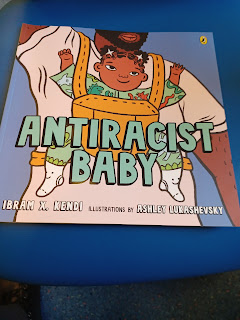
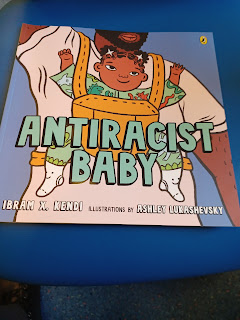
Rol: In the hospital, we get free kids books to give out to our patients. Today's box included 2 copies of this. Can you work out who the target audience is, because we are struggling...?
Ben: Neo Nazi toddlers?
Quite. The people who need this book will never read it. The people who don't need it don't need it. Not sure who Puffin is marketing this at.
That's what me and my mate were just saying.
It may have a positive intention but it doesn't have an audience for impact.
My favourite kids book of that level was The Last of the NooNoos.
I just googled that. I presume there's a subtext about racism towards green pigs.
Nah. The kid just wants to keep their dummy (noonoo).
Louise's friend has made up a song about this book. She's singing, "All the babies, all the babies, anti-racist babies..."
Is it wrong to dip bread in miso soup or is it British / Asian fusion?
Not a fan of miso soup at all. Louise used to make this dish with miso, noodles and pak choi. It was the only thing she ever made that I hated. I'm glad she stopped making it.
U don like udon?
I like noodles. Just not if they're in miso.
Miso's only a subtle flavour.
And Pak Choi is horrible. It's like that Spring cabbage they used to give us for school dinner that's like chewing through an enormous dock leaf.
Not if you wilt it properly.
Gotta cook it perfectly. Undercooked, it's like eating a garden leaf, overcooked and it's stewed.
Thank you, Delia.
I don't think Delia ever cooked it. It didn't come in a tin.
You realise it's 10.15 on a Saturday night right now? Robert Smith would be proud.
To eat miso soup?
Well, it is a panacea. The Cure to all his ailments...
I got my March pre-order email and I now order so many comics that I get a free copy of the Previews catalogue.
You did this to me.
Don't blame me. I don't even buy comics anymore.
No. You passed that curse to me. Now I have to wait til I'm in my sixties to pass it onto someone else.
Comics won't exist when you're in your 60s. All the old fart collector's who keep the industry afloat will be dead, and kids will be more interested in injecting VR bdiddliblngs straight into their neural shazboxes.
Old man shouts at clouds.
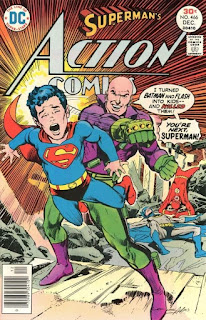
Here's a comic from when I was a kid...
Gotta love the 70s. Things were so much simpler then.
Also a sound plan from Lex Luthor.
Does that make Kid Flash now Mid Flash if Flash is turned to a kid?
Not if Lex has killed the Flash. That makes Kid Flash the Flash.
That's a lot of pressure on a kid.
And if Lex goes after him next, presumably he'll turn him into a baby and then kill that.
Does the device he used to de-age them only do so many years?
Surely he'd have been better off just turning them all into babies in the first place?
Or is there a Comics Code Authority red line?
Maybe he could turn them all into foetuses and flush them. Except that would upset the Bible Belt, so probably not.
Beating the shit outta kids is wholesome and Christian though.
Exactly. Just don't hurt them before they're born.