I clearly remember the first time I walked into a classroom as a trainee teacher. It was an adult Functional Skills English workshop, and all the students were quietly getting on with a variety of tasks in groups. It wasn't at all what I'd expected, and when the teacher I'd come to shadow said to me, "just go round the groups and see if anyone needs any help", I was suddenly terrified.
Just... walk up to complete strangers who didn't know me from Adam - many of whom were older than me, and of a variety of different ethnicities - introduce myself and offer them help? I'd prepared myself for standing at the front of a class and delivering a lesson to a group of teenagers. I had lots of experience in performance and presentation and making myself heard or noticed... but a quiet, casual chat with a gentle offer of assistance to grown-ups... that was well outside my comfort zone.
Those of you who have been following this series from the start will know that we've identified the main culprit of our stress, anxiety and other mental health concerns... the amygdala or monkey brain. To recap...
Whenever the amygdala senses any kind of threat – from a bus about to run us over in the street to somebody gossiping about us behind our back in the office – it sets off our spider-sense, various hormonal and neurological warning signals that in turn cause us to feel the symptoms of stress. These will vary depending on the individual and the situation, but they include all the old favourites – physical stuff such as increased heart rate, changes to breathing, hot or cold sweat, and mental reactions such as fear, anger and shame. Stress hormones basically prepare us to fight the threat or flee from the danger: fight or flight. But they often override our normal, logical human brain, and let our monkey brain take over.
The problem comes in the modern world, where the monkey brain finds it increasingly difficult to work out what's an actual threat to life... and what's merely a difficult problem to be overcome. So it looks to us for understanding... and we don't help ourselves by playing it safe.
In theory, any new experience contains danger. Meeting new people, starting a new job, going out on a first date, trying a new hobby or club... life would be so much easier if we just stuck with the stuff we know and are comfortable with. Anything new - well, we don't know how to deal with it or what problems we might encounter along the way. And that's scary.
Writing this particular blog series is a bit like that. Every time I sit down to do it, I'm forcing myself out of my comfort zone. I'm not really an expert on this subject, I'm just fumbling my way through. It would be so much easier when I open up my computer to just cobble together another edition of Saturday Snapshots or Namesakes. I know how to do those now. They might take time and research and a bit of head-scratching, but they're familiar and comforting and safe.
Or, I might put off writing the blog altogether and go watch some TV. Read a book (if only!). Watch some more music videos on youtube from bands I've never heard of.
New experience? !!Amygdala sends out warning signals!!
Result: I feel anxious.
Strategy? Play it safe.
Safety strategies are the things we all do to minimise risk or avoid tackling anything new. They include distracting ourselves with other (safe) activities or avoiding any situations that make us feel remotely uncomfortable.
However... whenever we do this, we tell the monkey that it was right - its perception of threat was bang on the money. As a result, it'll double its efforts to warn us about getting into that situation again.
If I stop writing this blog series because it's difficult and it makes me a little anxious, then next time I try, it'll be even harder.
If I avoid going out to a gig because there will be a lot of strange people there, and it'll be a late night, and I might not get home till after midnight... if I decide to stay at home instead and watch TV... then chances are, next time the opportunity arises, I probably won't even bother to buy tickets.
These are pretty mild examples, but I'm sure you can extrapolate them to cover more serious anxiety-causing situations in your own life. Playing it safe, avoiding problems or distracting ourselves from things that are worrying just confirms to our monkey brain that these things are threats to be avoided. It'll scream even louder next time.
Taken to an absolute extreme, this is where OCD comes from: you can't leave the house until you've completed these safety rituals. It's where alcohol and drug dependency starts: you feel less anxious when you have a drink. The monkey brain experts believe that even positive behaviour like exercise, meditation and structured relaxation techniques can be used as an escape strategy to help us avoid facing up to the things we fear... because when we do these things, we only confirm that the monkey was right to be afraid.
Back in the 90s, a former colleague of mine used to swear by a self-help book with that exact title... and I used to mock it as namby-pamby mumbo-jumbo. Yet from a brain science point of view, it seems like this is the best advice you can get. If we refuse to let our anxiety get the better of us - if we embrace the situation the monkey is screaming at us to avoid - and we do this repeatedly... then, we break down the cycle of anxiety and we teach the monkey that it's something we don't have to be afraid of.
Those early teaching experiences were really quite terrifying. I'd already pushed myself way out of my comfort zone by going back to university in my late 30s and retraining at something so different from anything I'd ever done before. I'd prepared myself for all kinds of problems and scenarios and figured out ways I might deal with them... but a workshop of adult learners, something that should have been far less scary than standing in front of a class of 17 year olds... that was almost my downfall. I came out of that first shadowing session and seriously asked myself if I'd made the right decision. Maybe teaching wasn't the right choice for me. Except it was too late to drop out now... and what else could I do?
The following week, I went back to the same class and was put in the same situation again. And it wasn't immediately easier. It took me a good few weeks before I worked out how to handle myself there, but eventually I did... and my anxiety subsided. Because I'd taught my monkey brain that it was OK. It wasn't something to be afraid of.
In her book, Don't Feed The Monkey Mind, Dr. Jennifer Shannon explains...
The monkey mind is like a small child or a pet watching you for guidance. I emphasize the word "watch". You cannot tell this part of your brain anything. The monkey can't be reasoned with, comforted, or distracted from its mission. The only way we can get what we want in live is to override its warnings with our behaviour.
Stop playing it safe, in other words. Playing it safe only reinforces our fears.
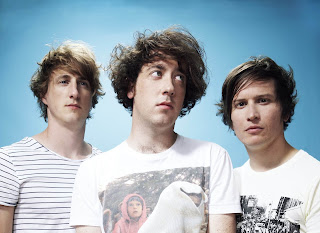
There are loads of song that mention other singers (solo artists) in their titles. I'm sure we'll have a Snapshots or two that will connect some of them in the future. But I had a devil of a time finding songs that mention other bands in the title. Well done if you worked out the connections, although hopefully the extra photos helped... and a late night / early morning guest appearance from Brian to get the ball rolling.
Apologies. I got two thirds of the way through this countdown before life got in the way. But I don't like leaving things unfinished, so the Hot 100 is back... maybe not every week, but whenever I get the time. Your suggestions, as always, are very welcome.
Wretch 32, pictured above, is a popular grime star, apparently. We used to have grime round these parts, then we got a new window cleaner.
Way back in July, George wondered whether the unsavoury lyrics in this oldie might make it unpalatable...
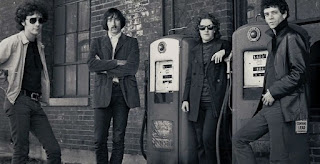
And here's the Charlatans with the same song... but not The Charlatans you and I know, the Manc band fronted by Tim Burgess, no, this is the original Charlatans...
And that was it for your suggestions. But what did my record collection throw up? Let's see if we can go even lower than Mr. Mister to start with, and climb up from there, shall we?
Brian enjoyed this week's early start and munched on a couple of Ladyfingers before bed. I remember when I used to be able to stay up till 11.30 on a Friday night.
6. Alfred's prizewinner wakes up Saint Peter.
That is a very young Robert Zimmerman, the future Nobel Prizewinner. This was going to be this week's Number One until I realised the original isn't available on youtube! Still, it is pretty obscurem I guess. Here's a passable live version...
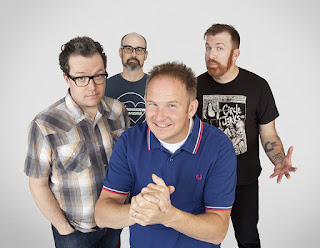
Happy to see The Swede recognise these guys, even though it took him a bit to get the right song.
If you've never heard Bathtime In Clerkenwell, please give it your ears for a couple of minutes. I can guarantee it won't sound anything like you expect... and if it doesn't make you grin, I'd check your smile at the doc's.
3. The gorgeous breadmaker chooses a naïve, shrunken crone.
Much puzzlement over this masked marvel, though Alyson got it in the end. She almost loses her mark for calling it "that awful milkshake song" though. Surely this is a female empowerment anthem?
1. Complete the marathon with Tracy and Bette.
Spencer Tracy & Bette Davis...
(Doesn't Stevie Winwood look young?)
Brian bagged this one early doors... making it a 3-all draw between him and The Swede as this week's joint winners.